Photo by Jo Hunt
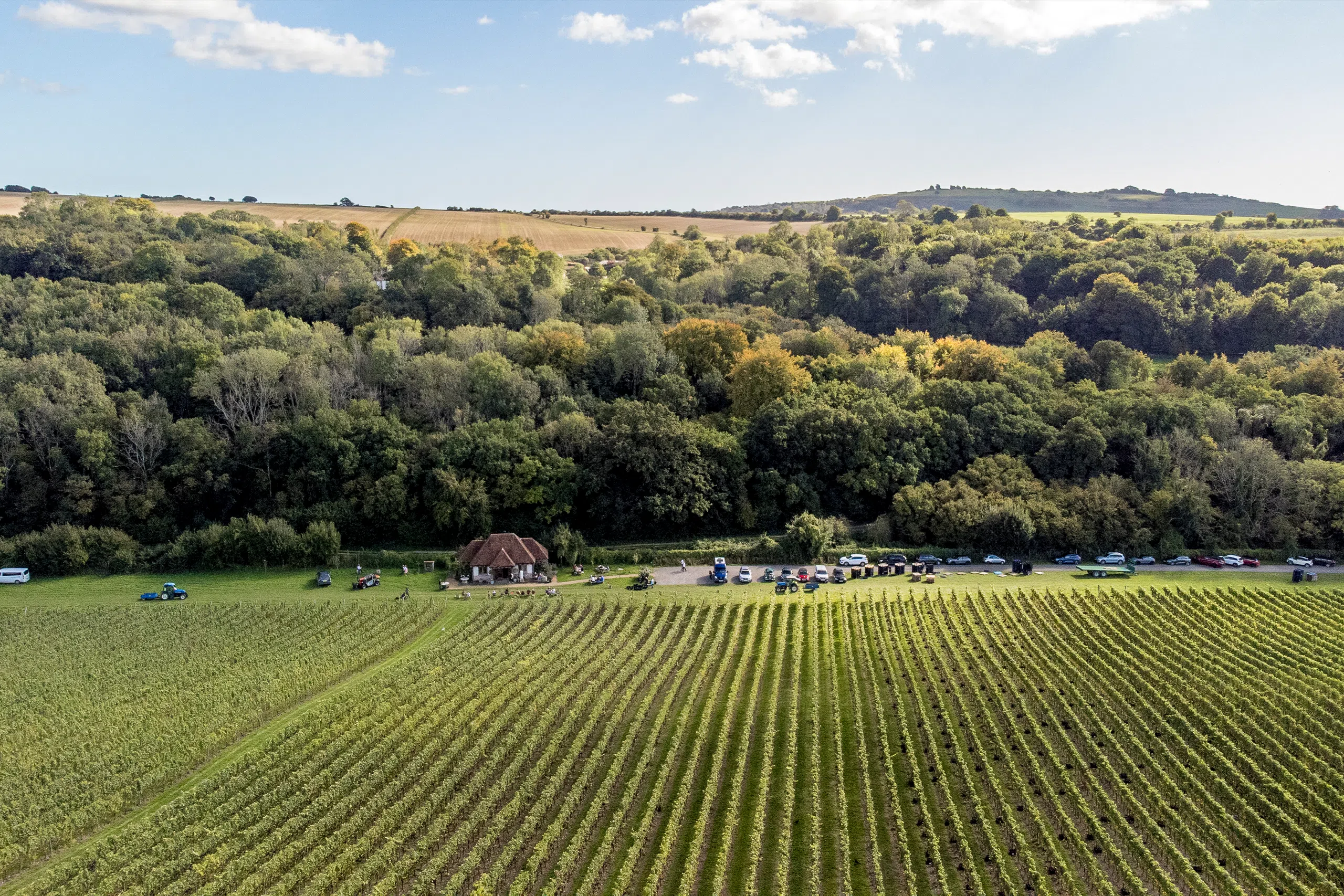
As Wiston marks 20 Years in the Vines, the celebration is as much about people as it is about wine: the growers and makers who have tended the vineyards, the community that has supported the journey, and the landscape that continues to define every bottle. It’s a moment to look back at the milestones, challenges and quiet triumphs that have shaped the estate – and to look ahead to the next chapter. Sussex Modern caught up with the team at Wiston to reflect on the past two decades, the evolution of English wine, and what the future holds for this remarkable corner of Sussex.
Congratulations on your 20th anniversary. Looking back over two decades, what moments or milestones feel most defining in Wiston’s journey?
The moment in 2008 when the first juice from our grapes poured out from between the wooden slats of our traditional Coquard basket press, and as a family we were able to taste this delicious, pure juice for the first time, remains unforgettable. For (South African) Pip, this was the moment she had waited decades for; it was when she finally felt truly connected with her new homeland.
Not long after, we were told that our Blanc de Blancs 2011 had received the highest score in the Decanter World Wine Awards, which had over 16,000 wines entered. This marked the first time an English wine had achieved the top score in this competition, and it was then that we realised our Chardonnay in particular was of world‑class quality.
More recently, the King serving our wine at the State Banquet at Windsor Castle in November 2025 was incredibly exciting and a real encouragement to see English wine championed at the highest level of hospitality this country offers.
Photo by Jo Hunt

Photo by Jo Hunt
How has the Sussex landscape shaped Wiston’s approach to growing and making wine since those first vines were planted?
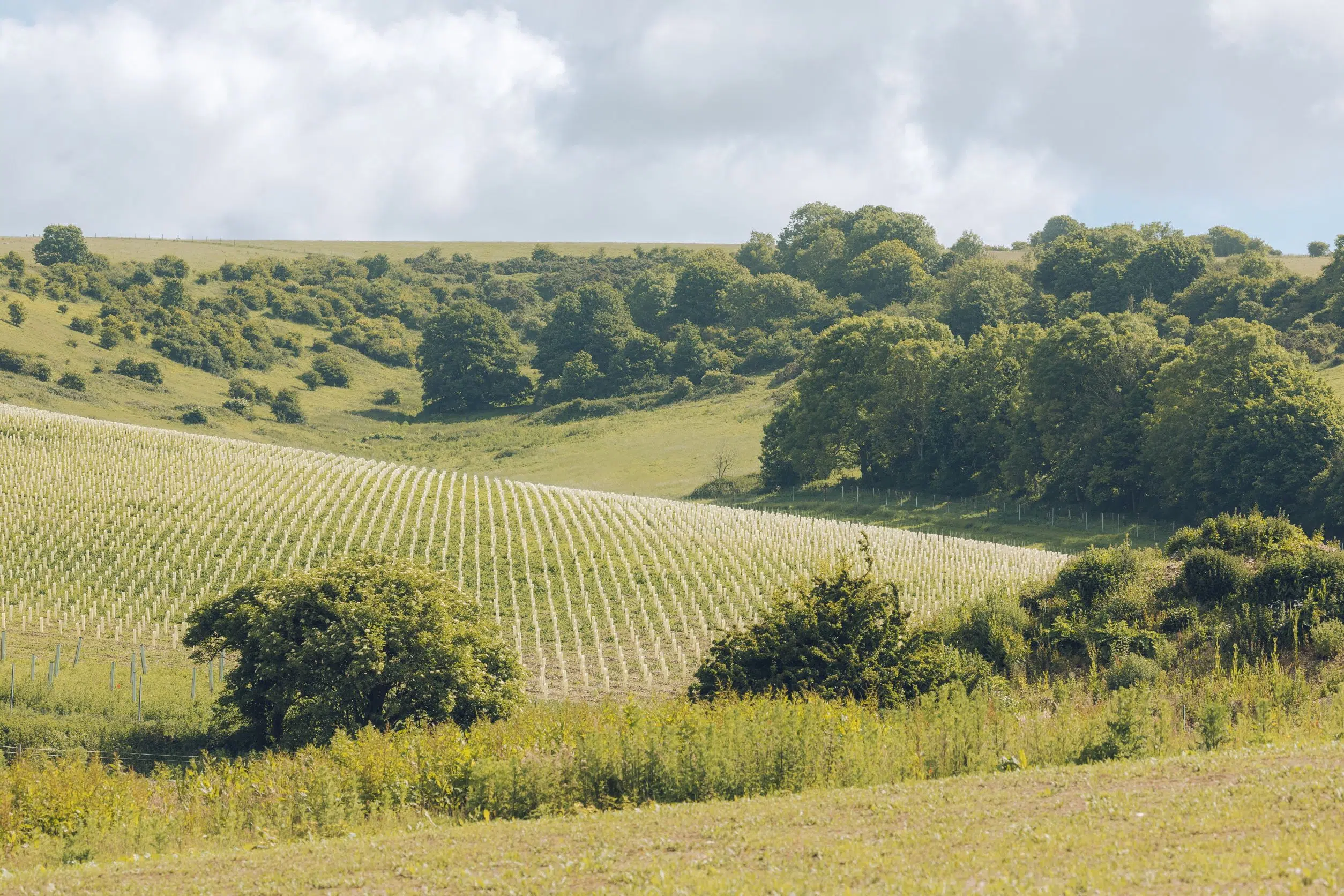
Our approach has always been guided by the beautiful chalky South Downs that the estate straddles. Chalk enables the vines to access essential water during hot summers, but ironically it is the low fertility of chalk that produces wines with such precision, concentration and finesse. The chalk also delivers wines with appropriate levels of acidity to enable extended periods of ageing. If we have learnt one thing over the last twenty years, it is that the very best things in life really are worth waiting for. The recent release of our Library Collection Blanc de Blancs 2009 perfectly displays how the traditional Champagne method, with its double fermentation, so exquisitely and elegantly interprets this landscape.

Photo by Jo Hunt
What has changed most in English wine over the past 20 years, and how has Wiston evolved alongside that shift?
One of the most exciting developments has been the growth of domestic wine tourism. Having started in 2016 with only one tour a week, which we hosted in a small barn in our original vineyard, we now run public wine tours twice a day from Wednesday to Sunday, with additional private tours and events on many weekends. To enable this far greater level of accessibility, we invested in a new Cellar Door shop, winery viewing gallery, tasting room, and also opened our restaurant CHALK in a restored flint barn. People’s recognition of English Sparkling as its own category, with Sussex Winelands as one of the key regions within that, has meant that demand to visit has started to gain momentum.
In distinction to Champagne, which has largely been thought of as an aperitif, English Sparkling is now starting to be poured in restaurants alongside food due to its dry, incisive taste profile. This is something we champion in CHALK, especially alongside our six‑course dinner tasting menu.
This anniversary celebrates the people behind the wines – how have growers, makers and the wider community shaped Wiston’s story?
While the vision to plant the vines was entirely Pip’s, the team, past and present, have been absolutely fundamental to everything that has happened since the vines went into the ground. Their total commitment to producing the very best wines and showing the utmost care at every stage of the process — whether in the vineyard or winery — has resulted in wines that are the purest expression possible of this land. The community, and our neighbours who live both on and off the estate, have enabled the enterprise to flourish. Whether that has been coming to pick grapes, bringing friends to CHALK, or responding to questions about what we should focus on in this next chapter, their support and voice have been invaluable.

Photo by Jo Hunt
As you look ahead, what excites you most about the next chapter for Wiston?
As a family we have always loved this land and wanted to care for it as best we could. We are so excited to now have a wonderful full‑time ecologist to help guide us in this mission of being kind to nature while still producing food and wine. We have seen the increase in biodiversity in the vineyards through planting cover crops between rows and wildflower meadows in the valley below. Those on our Safari and Explorer Tours become aware of how they can be part of championing nature in this area, whether directly through our conservation charity or indirectly by supporting us through buying wine. The growing interest in how the estate can be truly sustainable is incredibly encouraging for us as a family.
Kirsty Goring
To learn more about Wiston Estate’s wine, CHALK Restaurant, 20‑year celebrations and regular events, visit wistonestate.com.

Photo by Jo Hunt
Explore our website to discover more places across Sussex that celebrate the county’s wine, culture, creativity and landscape.

Photo by Josie Veale

 My Favourites