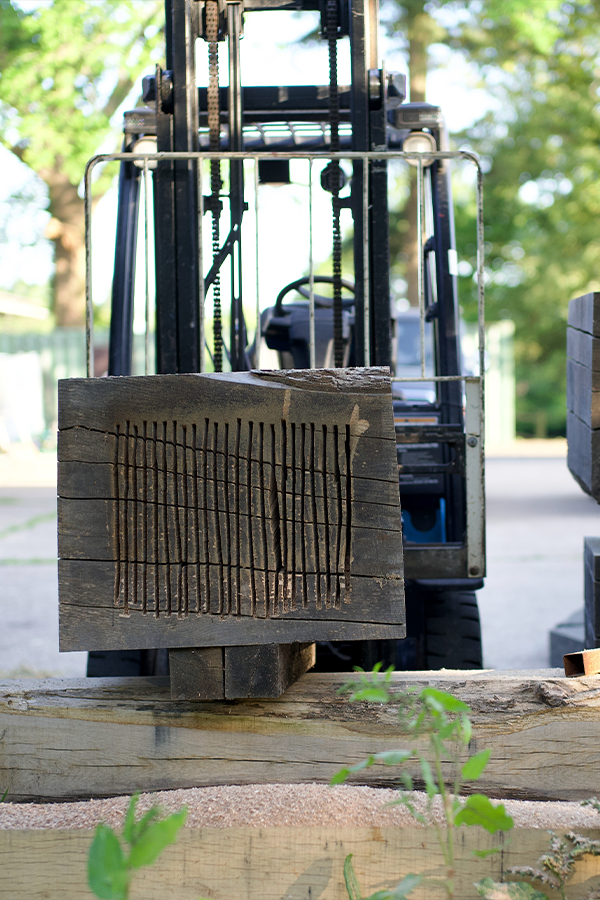
Abdollah Nafisi, Studio in West Sussex
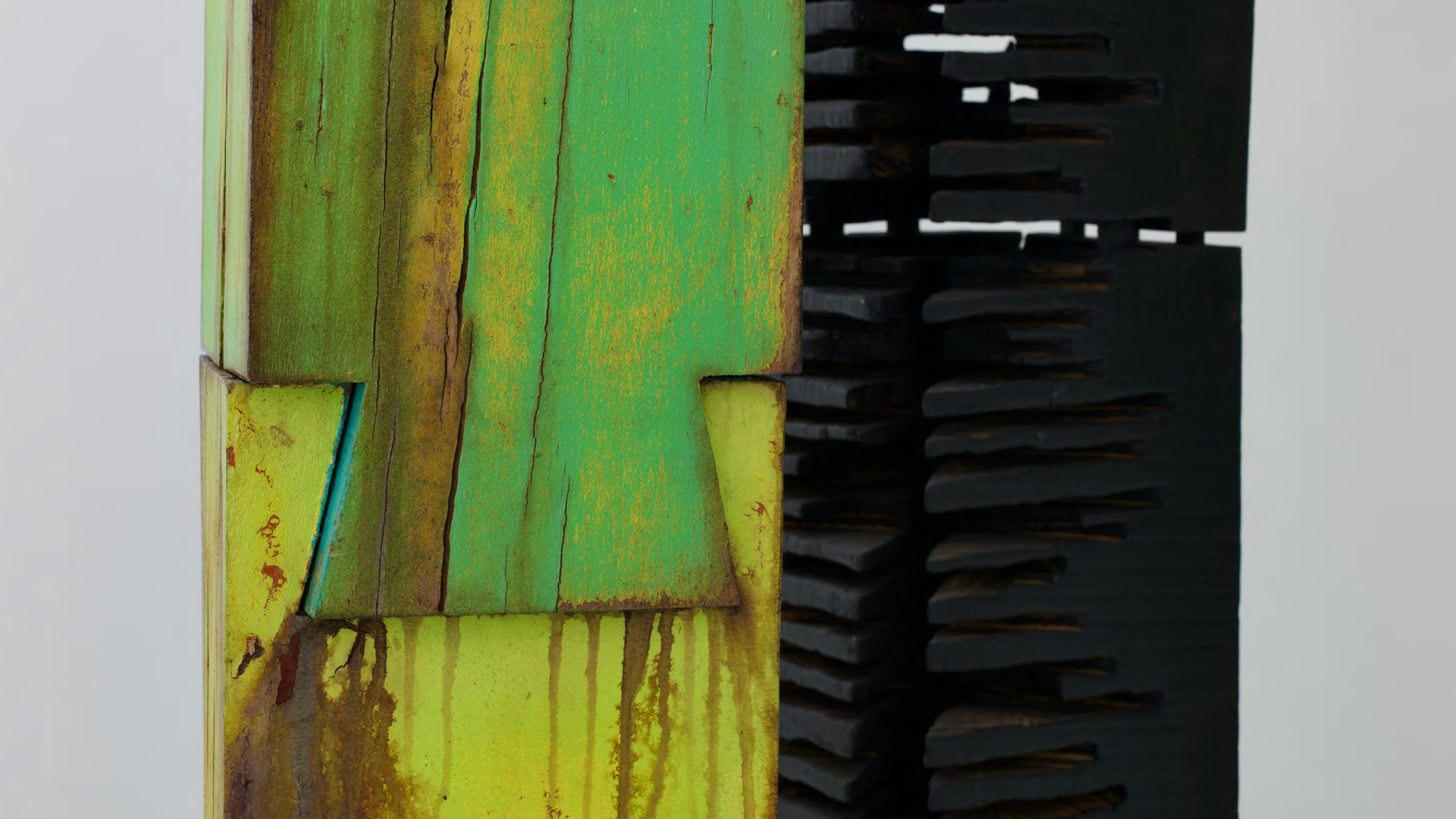
Born in Tehran and trained as a furniture maker before studying at the Royal College of Art, Nafisi’s practice has been shaped by experiences spanning industry, nature and time spent living alongside nomadic communities in Iran. Sound and performance often extend these investigations, opening up dialogues between people, places and objects.
Working from an off-grid studio in the Sussex countryside, surrounded by vineyards and open landscape, Nafisi has developed a practice rooted in reuse, attention and connection to the land. This autumn, he presents I Can’t Meditate, his first solo exhibition at Staffordshire St, London (16 Oct – 1 Nov 2026 and by appointment until mid-November), bringing together large-scale sculptures that explore mindfulness, making and the questions that shape his work.
Sussex Modern asked Abdollah Nafisi about the influence of his West Sussex surroundings, his relationship with materials, and the ideas behind I Can’t Meditate.
You work from an off-grid studio in the Sussex countryside. How does the landscape around you influence the way you think, make and approach your work?
My time working in the Sussex countryside changed my relationship with time and observation. Being surrounded by trees, open fields and the changing seasons allowed me to witness processes that happen independently of human intention. A fallen tree, for example, is not necessarily the end of something. It continues to change, decay and become part of another process. I became interested in what happens when we observe these changes without immediately trying to interfere.
I think the landscape taught me something about patience, but also about the limitations of control. In the studio, I construct forms and establish relationships between them. Yet I am increasingly interested in what happens beyond the decisions I make as an artist.
Abdollah Nafisi, Studio in West Sussex
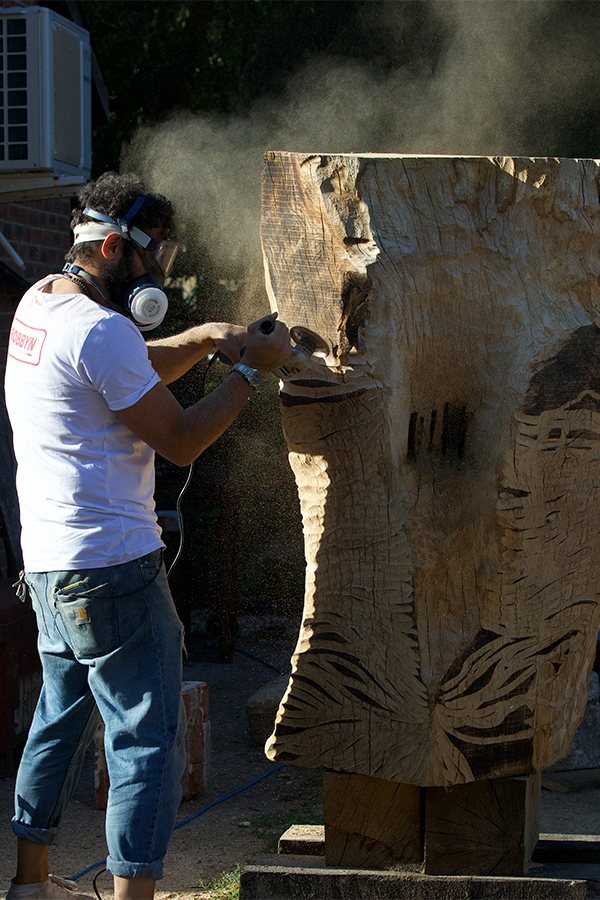
Abdollah Nafisi, Studio in West Sussex
Much of your work is created from trees felled by nature and reclaimed industrial steel. What attracts you to materials that already carry their own histories, and how do those histories shape the finished sculpture?
I am interested in materials that have already existed in another condition. A fallen tree has undergone years of growth, responding to gravity, wind, water and light. Industrial steel has been extracted, manufactured and shaped through human intervention.
When these two materials meet, they bring different relationships with time.
However, I do not necessarily want their histories to become the subject of the sculpture. I am more interested in what happens between them. How can two separate bodies establish a relationship without physically touching? Can the distance between them become as significant as the objects themselves?
The material gives the sculpture its physical presence, but the space between the forms is often where the work begins.
Sound and performance play an important role alongside sculpture in your practice. What possibilities do these elements open up within your work, and how do they enter into dialogue with your sculptures?
Sound allows me to investigate something that sculpture cannot always make immediately visible. For some time, I have been researching the internal vibrations of living trees, including the movement of water through their structures. A tree appears still to us, yet internally it is continuously active. This contradiction between apparent stillness and movement is central to my work.
For I Can’t Meditate, I positioned two large speakers facing one another, allowing visitors to stand within the space between them. Sound was not simply accompanying the sculptures; it was another material occupying the space. Unlike a solid object, sound moves through the body. It cannot be held in place. I am interested in how something invisible can establish a physical relationship between separate bodies.
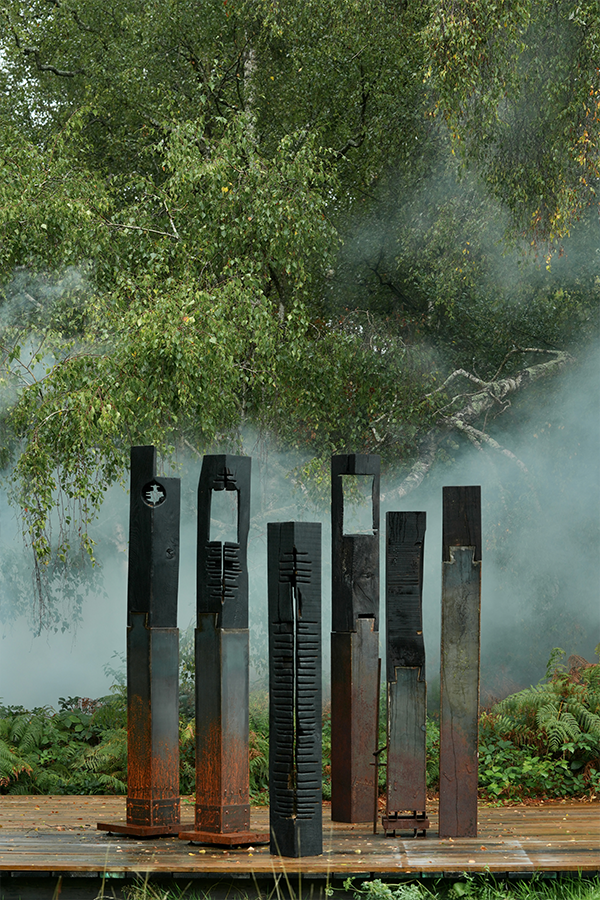
Abdollah Nafisi, Guardians: Watchers (combination), 2026.
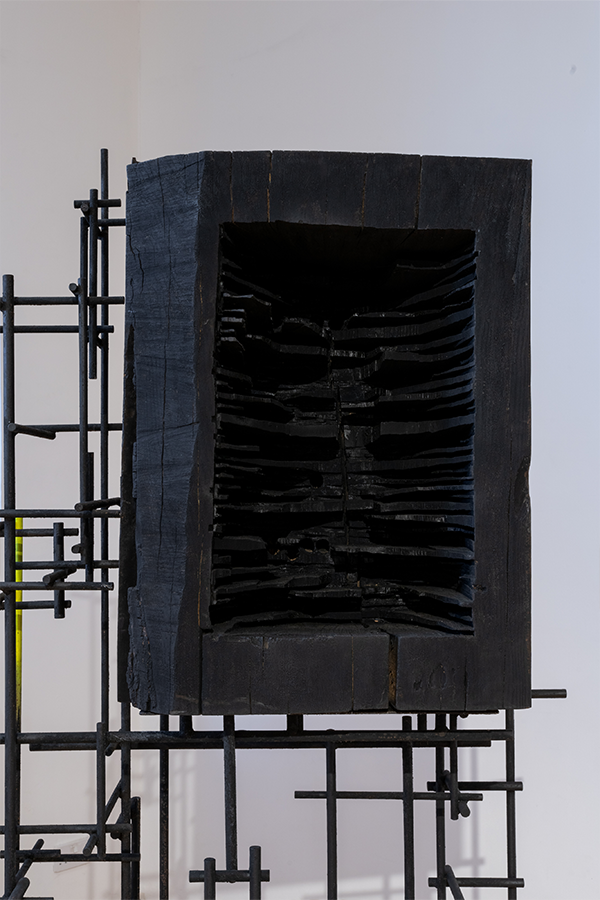
Abdollah Nafisi, The Bouncer, 2023. Photo by Sergey Novikov @plus1ap
Your experiences living and working alongside nomadic communities in Iran continue to resonate throughout your practice. In what ways do ideas of movement, connection and belonging find their way into your work today?
I spent approximately six years researching and spending time alongside nomadic communities in Iran. What interested me was not simply their movement across the landscape, but the relationship between people, animals, objects and the land.
In these communities, many things are understood through their relationships rather than as isolated entities. A temporary dwelling, for example, establishes a place without necessarily claiming permanence over it. This experience changed how I understood belonging. Perhaps belonging is not always about remaining in one place, but about the relationships we establish while passing through it.
I see a connection with my sculptures. Two separate forms may stand independently, yet their positioning creates a space that neither could establish alone.
I am interested in that condition of being separate and connected simultaneously.
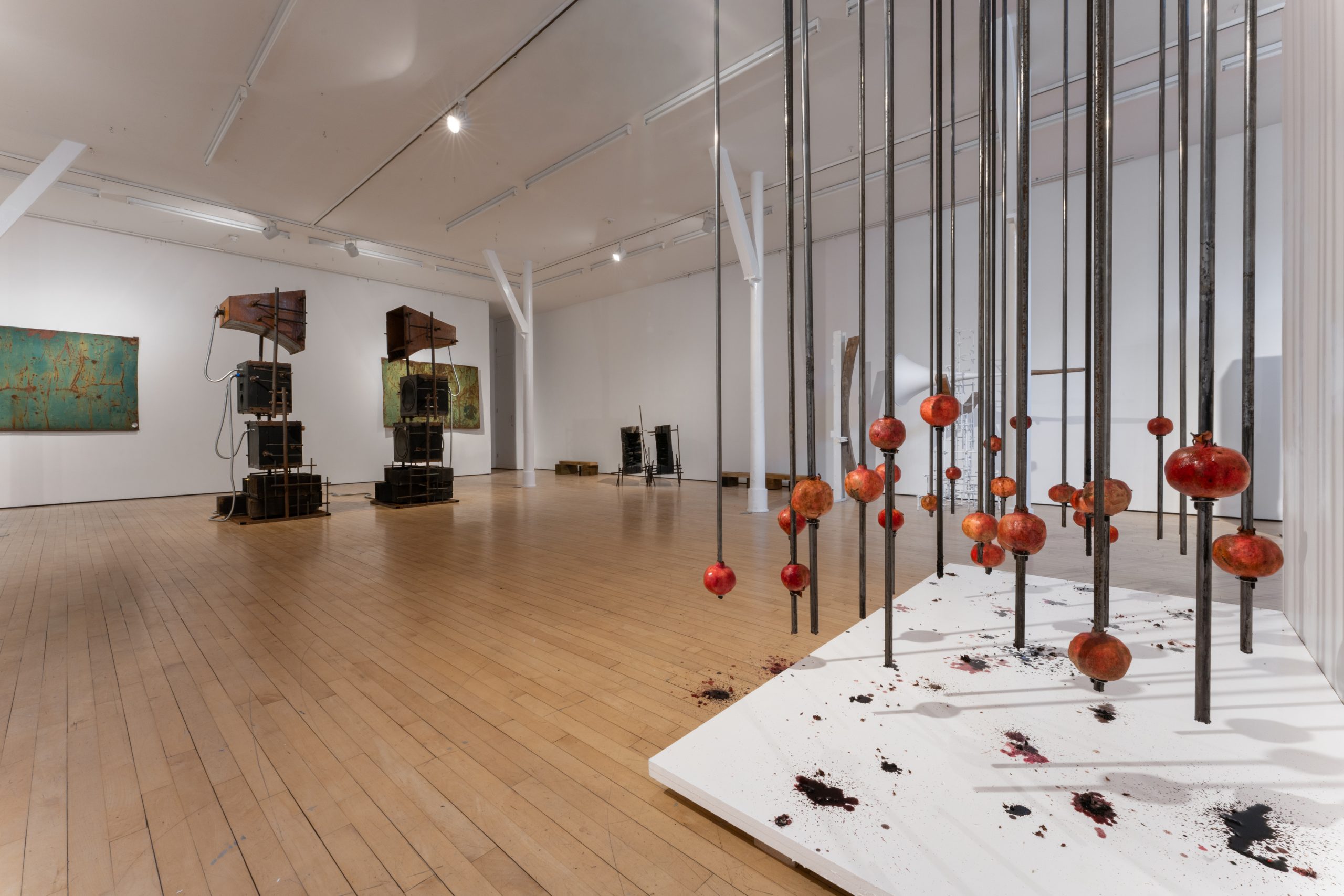
Abdollah Nafisi, I Cant Meditate, 2026. Installation view, Staffordshire St Gallery. Photo by Sergey Novikov @plus1ap]
The title of your recent first solo exhibition, I Can’t Meditate, feels both humorous and revealing. What inspired the title, and how does it connect to the ideas explored in the exhibition?
The title comes from a very simple contradiction. I have been interested in meditation for much of my life, yet I find it extremely difficult to sit still.
As a child, I encountered Sufi music and practices in which repetition, rhythm and movement could produce a different state of attention. Later, I began to recognise similar experiences while cycling, working with materials or listening closely to sounds. I started questioning whether meditation necessarily requires stillness.
For me, meditation may be less about achieving silence and more about paying attention without immediately reacting. The sculptures in the exhibition occupy a similar condition. They stand still, but the relationships
between them remain active. The audience moves, sound travels, and the space continually changes through our presence. The title acknowledges my inability to meditate in the conventional sense, while questioning what meditation might actually mean.
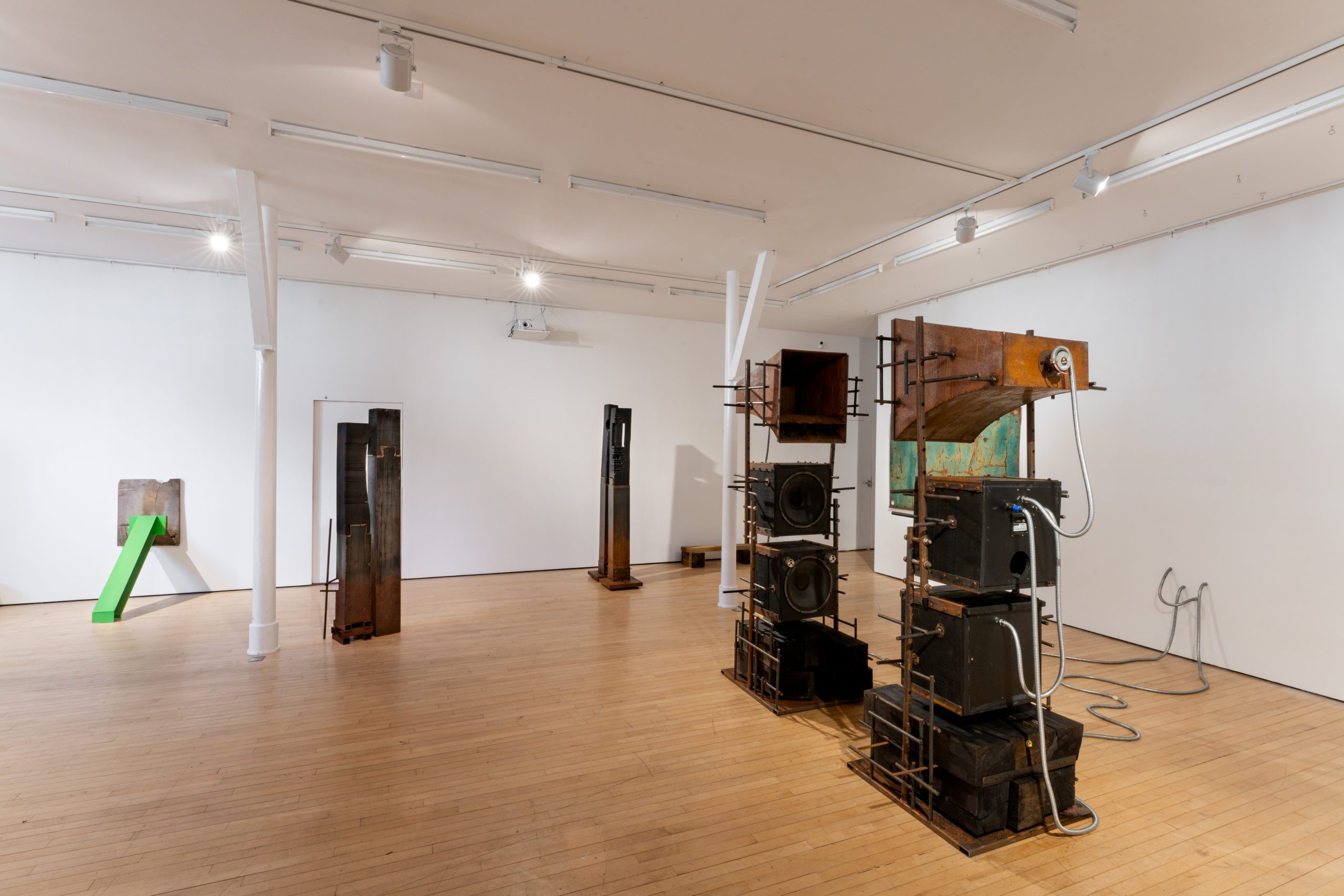
Abdollah Nafisi, I Cant Meditate, 2026. Installation view, Staffordshire St Gallery. Photo by Sergey Novikov @plus1ap]
Your studio in West Sussex has become a gathering place for artists, designers, growers, food producers and creative practitioners. How important are conversation and community to your work, and what do those exchanges bring to the creative process?
I have always been interested in conversations that happen outside the boundaries of a particular discipline.
A conversation with a farmer about soil, a carpenter about the behaviour of timber, or a musician about silence can be as important to my thinking as a conversation about sculpture.
What interests me is that different people can approach the same material or phenomenon through entirely different forms of knowledge.
I do not necessarily see community as a means of producing collaborative work. Sometimes the value of an exchange is simply that it challenges an assumption.
Perhaps there is also a relationship between this and my sculptures. Each person brings an independent position, and something emerges in the space between those positions.
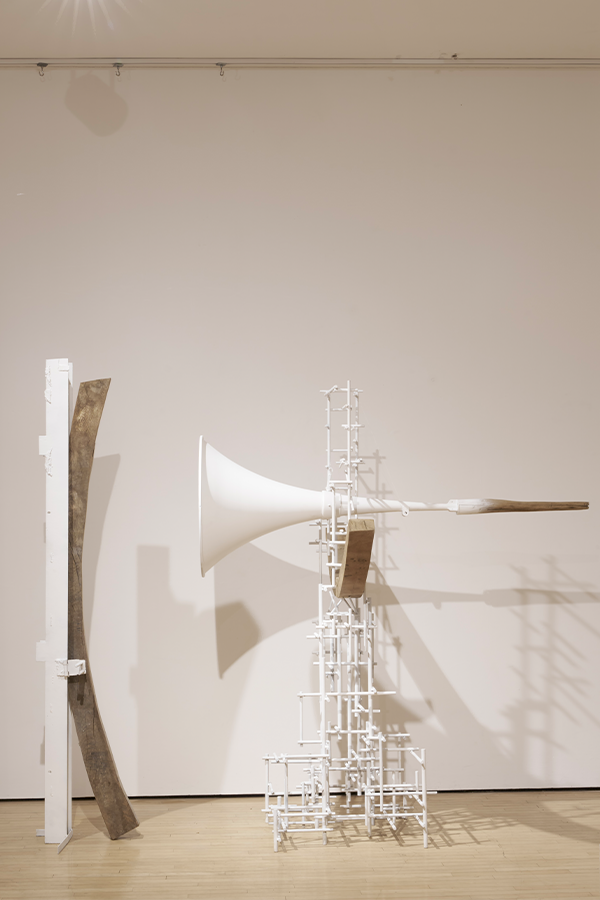
Abdollah Nafisi, Neighbours Silence II, 2025. Photo by Abdollah Nafisi
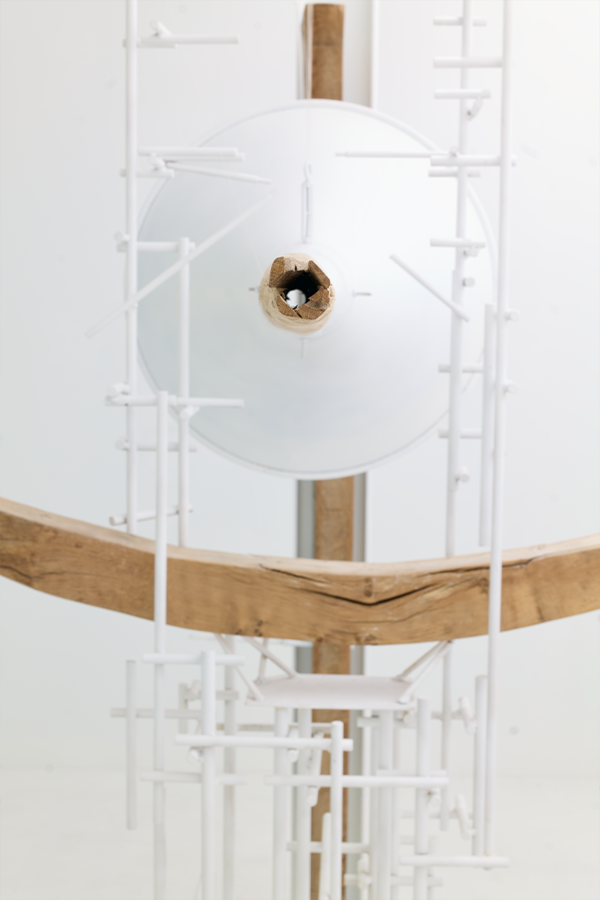
Abdollah Nafisi, Neighbours Silence II, 2025. Photo by Abdollah Nafisi
What’s on the horizon for you, and what questions are currently shaping your thinking and practice?
I am currently thinking about a question: How long can we witness change before we interfere with it?
This question informs an ongoing body of work called Slow Return. I construct forms from steel and leave them exposed to air and water. Oxidation begins, colours shift, and the material develops beyond what I can fully determine. At some point, I intervene and seal the surface, preserving one moment in that process.
I am interested in the decision to intervene. Why do we feel the need to stop something from changing? And at what point does observation become an attempt to control? These questions extend beyond materials. They concern our relationship with time, the natural world and perhaps even one another.
I increasingly think of sculpture not simply as the production of an object, but as a way of examining these relationships.
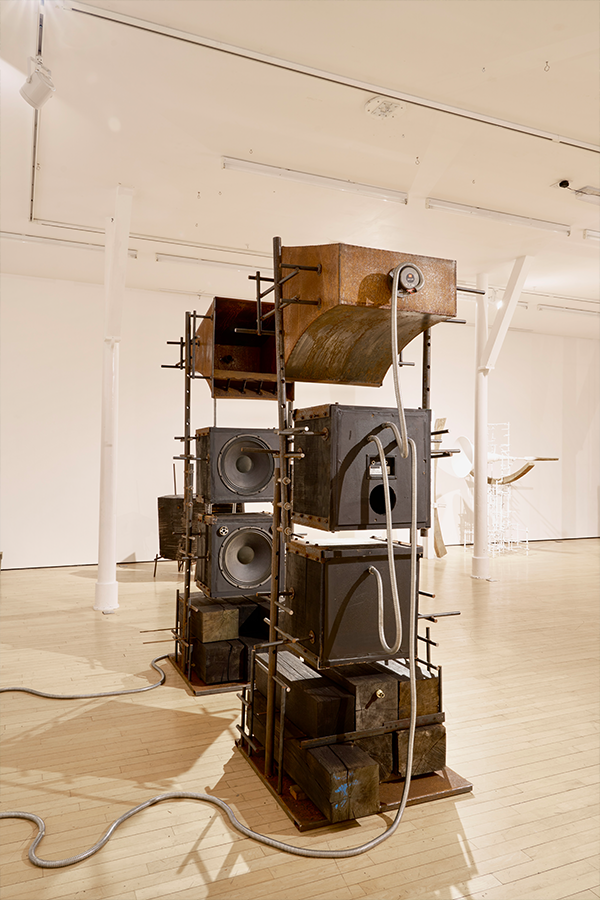
Abdollah Nafisi, Neighbours Sound I, 2026. Photo by Abdollah Nafisi
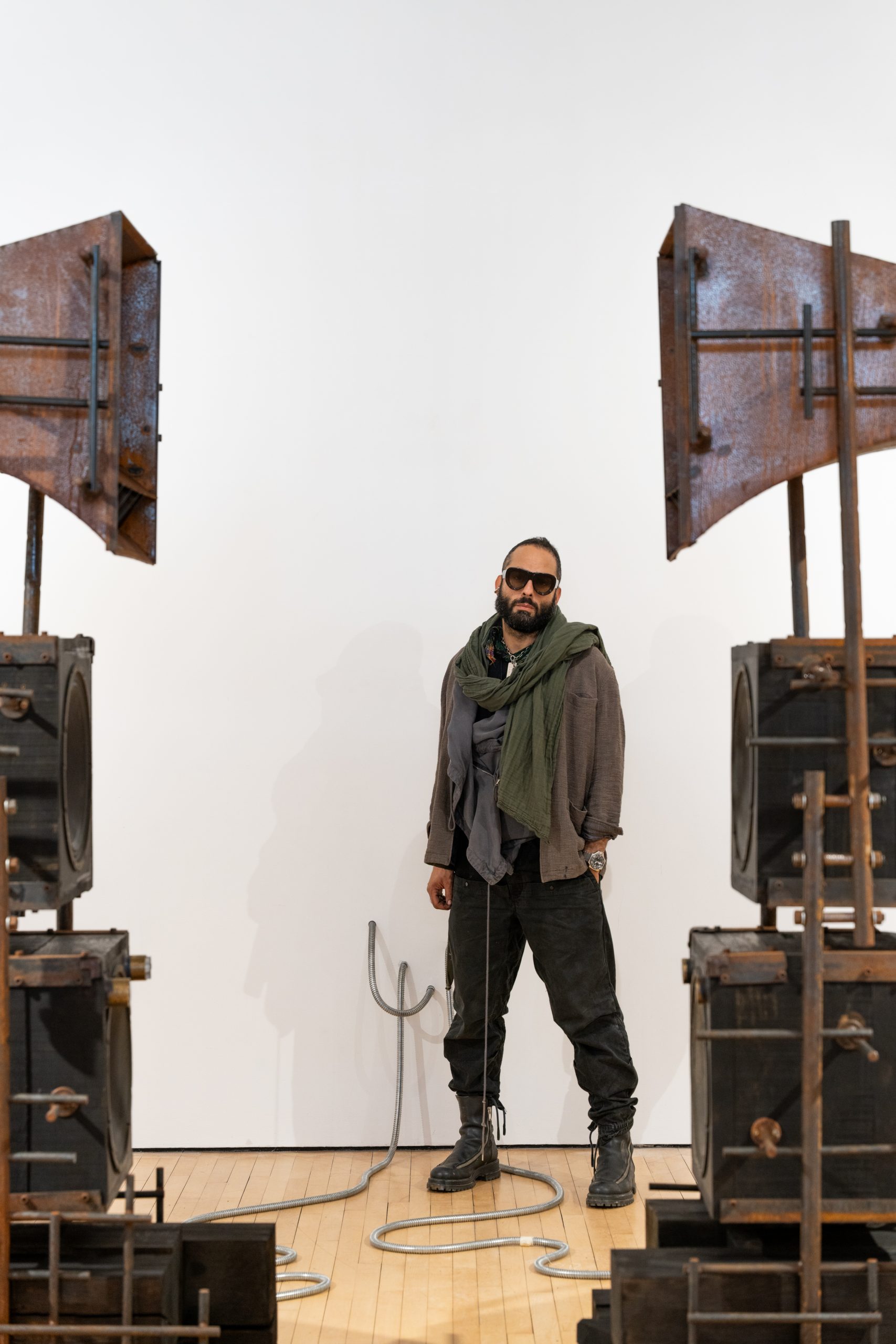
Abdollah Nafisi, Installation view with Neighbours. Photo by Sergey Novikov @plus1ap]
Explore our website to discover more places across Sussex that celebrate the county’s food culture, creativity and landscape.
Art | News

Art

Events | Art

 My Favourites
